
The Buckeye Institute

Press Releases

Press Releases, Testimony & Public Comments

“The Buckeye Institute-Led Coalition Files Public Comments, Demonstrates Failings of Proposed EPA Rule”

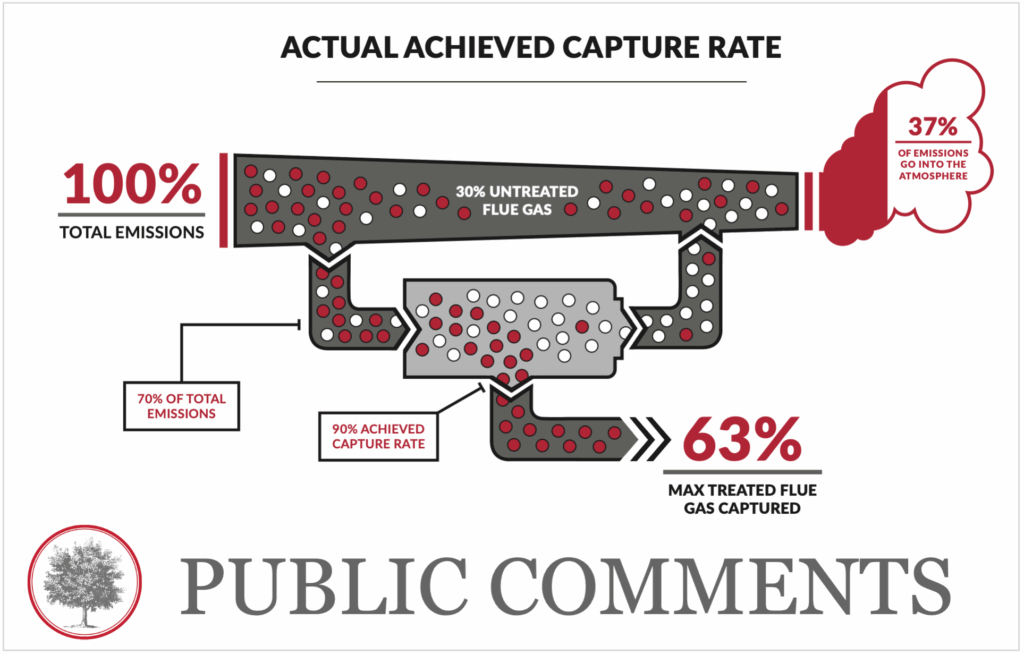
The Buckeye Institute led a coalition of free-market organizations in filing public comments on the U.S. Environmental Protection Agency’s proposed rule for new and existing fossil fuel-fired power plants. The Frontier Institute in Montana, Caesar Rodney Institute in Delaware, John Locke Foundation in North Carolina, and Mackinac Center for Public Policy in Michigan joined Buckeye in filing the comments. The proposed rule could exacerbate the impending energy security and reliability crisis.

Legal, Press Releases

The Buckeye Institute Urges Court Uphold Injunction While Free Speech Case Is Heard

The Buckeye Institute filed its second amicus brief in Missouri v. Biden. This one urging the U.S. Court of Appeals for the Fifth Circuit to uphold a preliminary injunction—that forbids the Biden Administration from “jawboning” social media companies to censor viewpoints the government does not agree with—until the case is resolved. In this brief, Buckeye highlights several examples going back to World War II, when the federal government provided the American public with information only to find later that the government’s initial assessment was, in fact, wrong.

Legal, Press Releases

The Buckeye Institute Files Suit on Behalf of School Bus Driver to Stop Wage Theft

The Buckeye Institute filed a lawsuit on behalf of David Krizon, a bus driver with the Minerva Local Schools in Minerva, Ohio, who continues to have money illegally taken out of his paycheck by his employer and given to a government union. Buckeye filed Krizon v. Ohio Association of Public School Employees (OAPSE) in the Stark County Court of Common Pleas. Stay up-to-date on Krizon v. OAPSE at BuckeyeInstitute.org/KrizonvOAPSE.

Legal, Press Releases

The Buckeye Institute Calls on SCOTUS to Overturn Chevron and Assert Judicial Independence

The Buckeye Institute was joined by the National Federation of Independent Business in filing an amicus brief in Loper Bright Enterprises v. Raimondo, calling on the U.S. Supreme Court to abandon the Chevron doctrine, which compels federal courts to defer to a federal agency’s creative statutory reading of a law—beyond what Congress authorized. In their brief, The Buckeye Institute and NFIB argue that Chevron deference has led to agency self-aggrandizement, legislative indifference, and judicial passivity.

Press Releases

The Buckeye Institute: Ohio’s Job Market Continues to Set Records

The Buckeye Institute commented on the newly released jobs report from the Ohio Department of Job and Family Services, saying, “In June, Ohio’s job market continued a streak of record-low unemployment, with the unemployment rate declining to 3.4 percent from 3.6 percent, and, for the second month in a row, Ohio has a lower unemployment rate than the national average. With an unchanged labor force participation rate, Ohio’s jobs report shows that Ohioans looking for work are finding jobs.”

Legal, Press Releases

The Buckeye Institute in Brief to Court: Governments Cannot Create Fourth Amendment-Free Zones

The Buckeye Institute filed an amicus brief in Johnson v. Smith, calling on the U.S. Court of Appeals for the Tenth Circuit to stop the government from conducting warrantless searches of Americans’ homes and businesses. “Our Founding Fathers were well aware of the risks inherent in warrantless and unreasonable government searches of private homes and businesses…In Johnson v. Smith, the court has another opportunity to tell government officials that they cannot create Fourth Amendment-free zones through oppressive regulatory schemes.”

Legal, Press Releases

The Buckeye Institute Calls on SCOTUS to Protect Free Speech from Government “Jawboning”

After a win in Missouri v. Biden, The Buckeye Institute filed an amicus brief in O’Handley v. Weber—a free speech case out of California—calling on the U.S. Supreme Court to hear the case and stop the state of California from “jawboning” social media companies to censor viewpoints the government does not agree with. As it did in its amicus brief in Missouri v. Biden, Buckeye argues that “jawboning” blurs the line between permissible government speech and impermissible censorship schemes and raises significant concerns about the expansion of the government speech doctrine. 

Legal, Press Releases

The Buckeye Institute Joins Brief Urging SCOTUS to Uphold Separation-of-Powers Principle

The Buckeye Institute joined New Civil Liberties Alliance in filing an amicus brief in Consumer Financial Protection Bureau v. Community Financial Services Association of America, calling on the U.S. Supreme Court to rein in the power of the unelected administrative state and protect the separation-of-powers principle embedded in the U.S. Constitution. “In violation of the Appropriations Clause and the separation of powers, the CFPB is free from any meaningful form of democratic accountability and has no meaningful constraints on its authority.”

Legal, Press Releases

The Buckeye Institute Calls on SCOTUS to Protect Rights of Property Owners to Have Cases Heard in Federal Court

The Buckeye Institute joined Small Property Owners of San Francisco Institute (SPOSFI) and Owners’ Counsel of America (OCA) in filing an amicus brief in Gearing v. Half Moon Bay, calling on the U.S. Supreme Court to hear the case and protect the Gearing’s constitutional right to have their Fifth Amendment takings case heard in federal court as affirmed in Knick v. Township of ScottGearing v. Half Moon Bay is being argued by Pacific Legal Foundation.

Press Releases

Ohio’s Budget Includes The Buckeye Institute-Championed Universal School Choice and Tax Cuts

Robert Alt, president and chief executive officer of The Buckeye Institute, commented after Governor Mike DeWine signed House Bill 33, Ohio’s biennial budget, into law. “Governor DeWine proposed greater school choice for Ohio families, Speaker Stephens and the Ohio House expanded it, and President Huffman and the Ohio Senate rightly made it universal. As a result, Ohio families will have access to the education that best meets their children’s needs.”

Scroll to Top