The Buckeye Institute

Press Releases

Press Releases

The Buckeye Institute Demands D.C. Allow The Big Board to Re-Open

The Buckeye Institute sent a demand letter to the District of Columbia’s Department of Consumer and Regulatory Affairs (DCRA) insisting that the suspension of Eric Flannery’s operating license be reversed and that Mr. Flannery be allowed to re-open his bar and restaurant, The Big Board, immediately. The letter requests a response from the city by Wednesday, February 23. “Mr. Flannery wants to get back to doing what he does best—serving great burgers in the city he loves.”
Press Releases

The Buckeye Institute-Championed Ohio Personal Privacy Act Passes Ohio House

The Buckeye Institute issued a statement after the Ohio House of Representatives passed House Bill 376, saying, “While Washington has abdicated its responsibility on data privacy, lawmakers in the Ohio House of Representatives have stepped up and passed the carefully crafted Ohio Personal Privacy Act. The Buckeye Institute-championed policies in this legislation—which is a model for the nation—balance the tradeoffs between protecting consumers’ data privacy and not overburdening businesses and consumers.” 

Press Releases

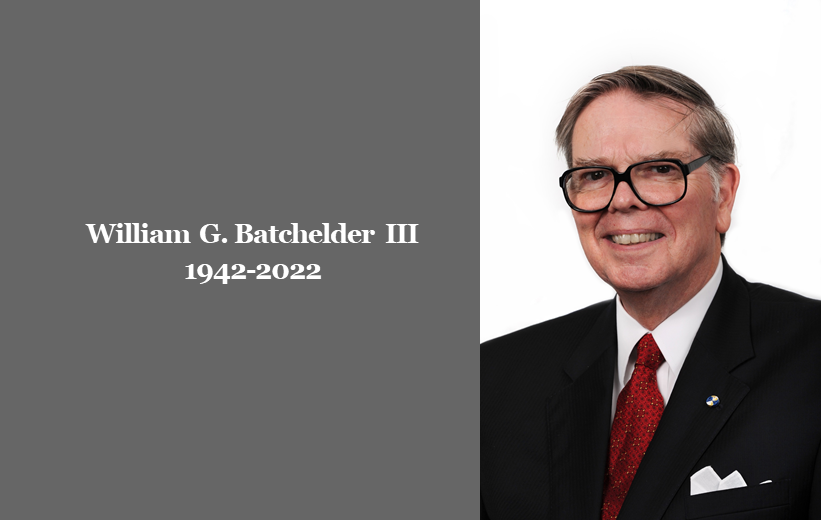
The Buckeye Institute’s Robert Alt Reacts to the Passing of Ohio Speaker Bill Batchelder

Robert Alt, president and chief executive officer of The Buckeye Institute, issued the following statement on the passing of Ohio Speaker William G. Batchelder III, saying, “If Bob Taft was Mr. Republican, Bill Batchelder was Mr. Conservative. Ohio Speaker William G. Batchelder III graced all of us with his insight, wit, and leadership as the standard bearer of intellectual and personal integrity and he embodied conservative principles in action.”

Policy Research & Reports, Press Releases

The Buckeye Institute Urges Ohio Lawmakers to Replenish Unemployment Trust Fund with ARPA Funds

In a new policy memo, How Ohio Should Spend Phase II of American Rescue Plan Funds, The Buckeye Institute recommends that Ohio use its second payment from the American Rescue Plan Act to “replenish the state’s unemployment trust fund to its pre-pandemic balance and safeguard families and businesses from future downturns and tax increases.” To take advantage of a federal grace period and avoid a “maintenance of effort” provision, state lawmakers must adopt this strategic use-of-funds policy before April 1, 2022.

Policy Research & Reports, Press Releases

“The Buckeye Institute: Ohio Personal Privacy Act, Among Best in the Nation, Could be Even Better”

In a new policy memo, Ohio’s Data Privacy Tradeoff, The Buckeye Institute outlined how lawmakers can improve the Ohio Personal Privacy Act (House Bill 376) to make good policy even better. While the “legislation is not perfect and improvements can be made,” the “Ohio Personal Privacy Act would be among the best data privacy laws enacted or being considered.”

Policy Research & Reports, Press Releases

The Buckeye Institute Assesses Consequences of Proposed Wyoming Medicaid Expansion in New Policy Brief

The Buckeye Institute released its latest policy brief, Federal Rates are Temporary, But Expansion is Forever: The Significant Financial Risks for States Considering Medicaid Expansion, which outlines the permanent consequences for Wyoming should it opt into Medicaid expansion and later seek to opt-out. “Advocates of an opt-in/opt-out strategy for Medicaid expansion in Wyoming naïvely assume that Medicaid expansion can be explored risk-free when a clear reading of NFIB v. Sebelius states otherwise.” 

Legal, Press Releases

The Buckeye Institute Wins Vaccine Mandate Case

The Buckeye Institute has won its case—Phillips v. OSHA—challenging the OSHA vaccine mandate with the Biden Administration conceding that Buckeye’s clients were ultimately likely to prevail in their legal challenge. The Biden Administration is not fighting the case any further and entirely withdrew its emergency temporary standard rule. “The U.S. Supreme Court was perfectly clear that the Biden Administration’s vaccine mandate exceeds OSHA’s authority, and our clients have won their rightful victory and prevailed in this important case while the Biden Administration finally admitted defeat.”

Policy Research & Reports, Press Releases

New Buckeye Institute Report Offers a Blueprint for How Ohio Cities Can Transition to a More Sustainable Tax System

The Buckeye Institute released a new report, Sustainable Ohio: How to Fund Ohio’s Cities in the 21st Century, which offers a blueprint for how Ohio can move away from its outmoded local income tax system—that heavily relies on nonresident taxpayers—and towards a property or sales tax system that will fund city services in a much more sustainable way. By transitioning to the new funding system Ohio’s cities can better provide government services, attract and retain businesses and workers, and offer residents the economic growth and opportunity they deserve.

Press Releases

The Buckeye Institute: Ohio’s Jobs Market Ends 2021 with a Bang

The Buckeye Institute commented on the newly released jobs report from the Ohio Department of Job and Family Services, saying, “Ohio experienced another strong jobs report in December—with the unemployment rate falling to 4.5 percent and the labor market participation rate increasing to 61.5 percent—to end 2021 on a strong note…As Ohio enters its third year of dealing with the pandemic, it is clear policymakers need to do more to spur economic growth and adopt policies that will attract employers to the state.”

Legal, Press Releases

The Buckeye Institute Files Appeal in First Amendment Case Supporting School Guidance Counselor

The Buckeye Institute filed its appeal brief in Kolkowski v. Ashtabula Area Teachers Association with Ohio’s Eleventh District Court of Appeals, urging the court to recognize that a union—which Barbara Kolkowski is not a member of—cannot force her to accept union legal representation to arbitrate her workplace grievance. “The Fifth Amendment to the U.S. Constitution, Ohio case law, and Ohio’s collective bargaining statute are clear: employees have the right to choose their own counsel in a workplace arbitration.”

Scroll to Top